2 Lens Telescope

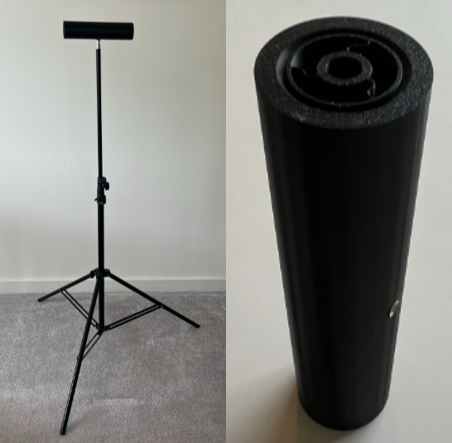
This telescope was designed and built to achieve the highest magnification using a simple two-lens Galilean setup without chromatic aberration correction. The system pairs a 222 mm positive plano-convex objective with a -13 mm negative plano-concave eyepiece, providing an angular magnification of 17.1X. Both lenses were sourced from https://surplusshed.com/.
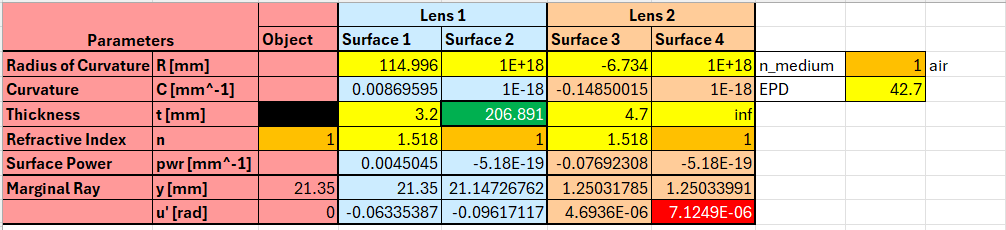
Optics - Predesign
• First-Principles Layout: Hand calculations established the baseline paraxial geometry before setting up the Zemax model.
• Thick-Lens Separation: The paraxial calculated distance between both lenses was calculated to be 206.891 mm.

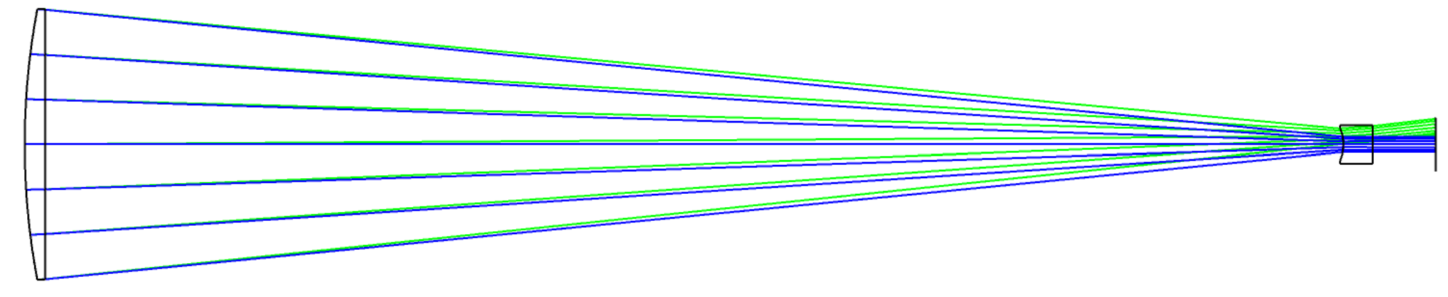
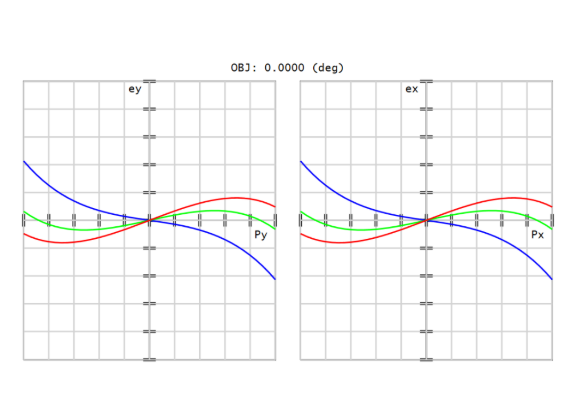
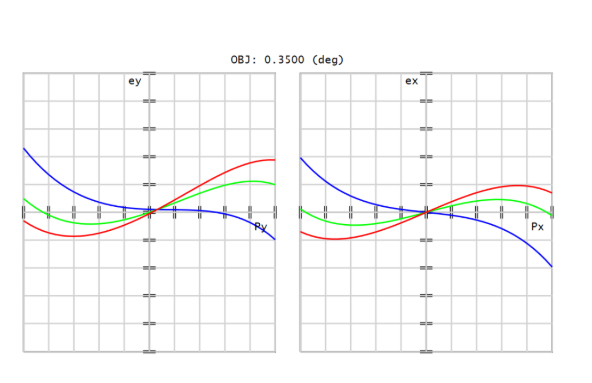
Optical Modeling & Analysis
• Simulation Setup: Modeled in Zemax as an afocal Galilean system operating at an angular magnification of ~17.1x with a 40 mm entrance pupil.
• Air Gap Optimization: The physical lenses separation was set as a variable and optimized to balance paraxial collimation with marginal ray defocus.
• Aberration Breakdown:
◦ Axial Chromatic Aberration: Significant focal dispersion across the visible spectrum due to the absence of an achromatic doublet corrector.
◦ Spherical Aberration: The second most profound aberration present. Cubic shaped ray fans.
◦ Coma: Observing the off-axis field (tangential plane), the marginal rays on the opposite sides of the pupil have an asymmetric amount aberration.
◦ Astigmatism: Small amount of astigmatism from asymmetries in tangential and sagittal planes.
◦ Other aberrations are also present but in smaller amounts.
Telescope Design
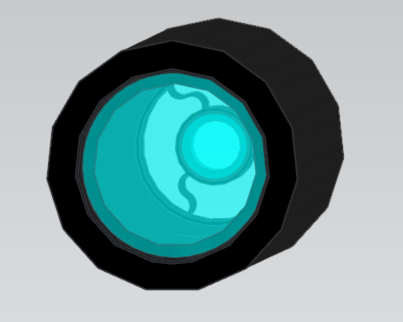
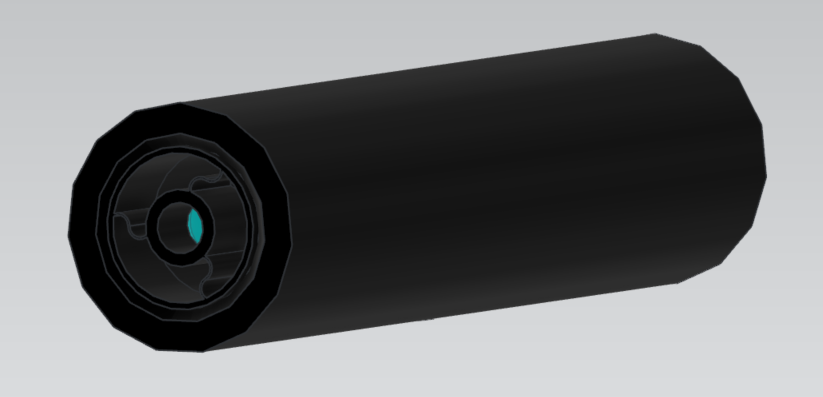
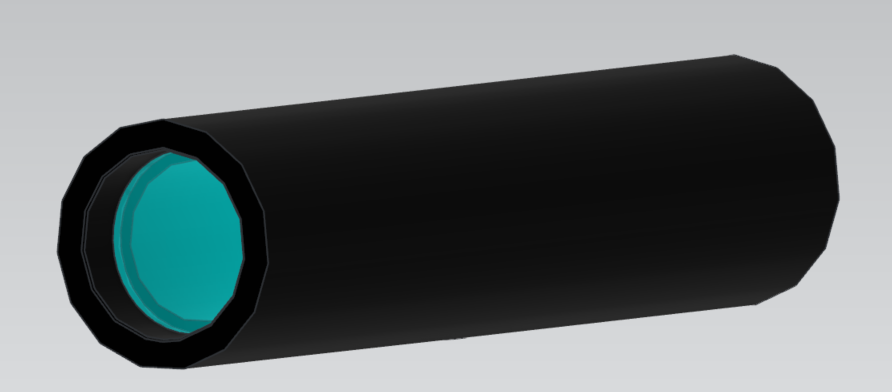
The telescope design consists off:
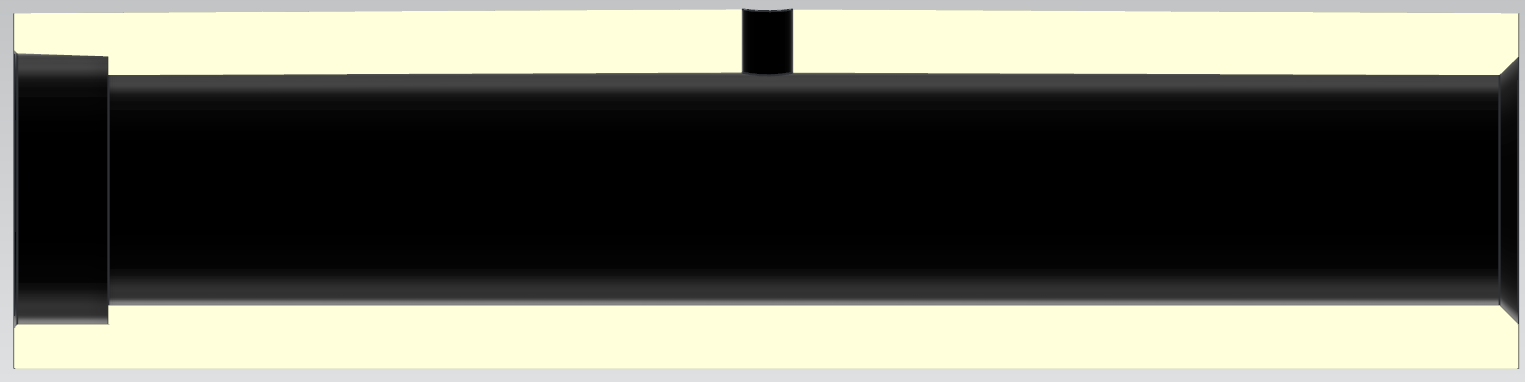
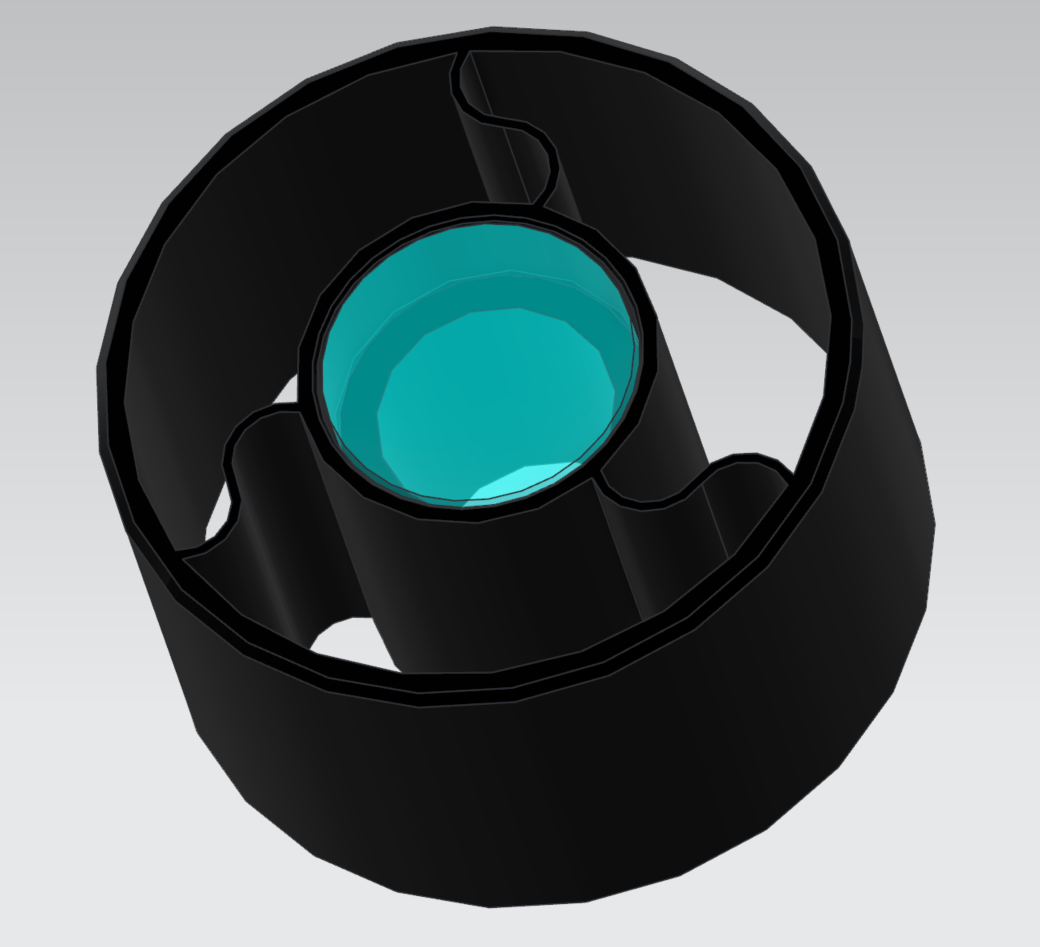
Long barrel, to account for the air gap distance between the positive and negative lens, which holds objective lens and the eyepiece lens cell.
Eyepiece lens cell, which gets press fit into the the barrel, which holds the negative lens.
Objective lens, f = 222 mm
Eyepiece, f = -13 mm
*Both the barrel and the cell were 3D printed.
Opto-Mechanical Design
Lens Mounting
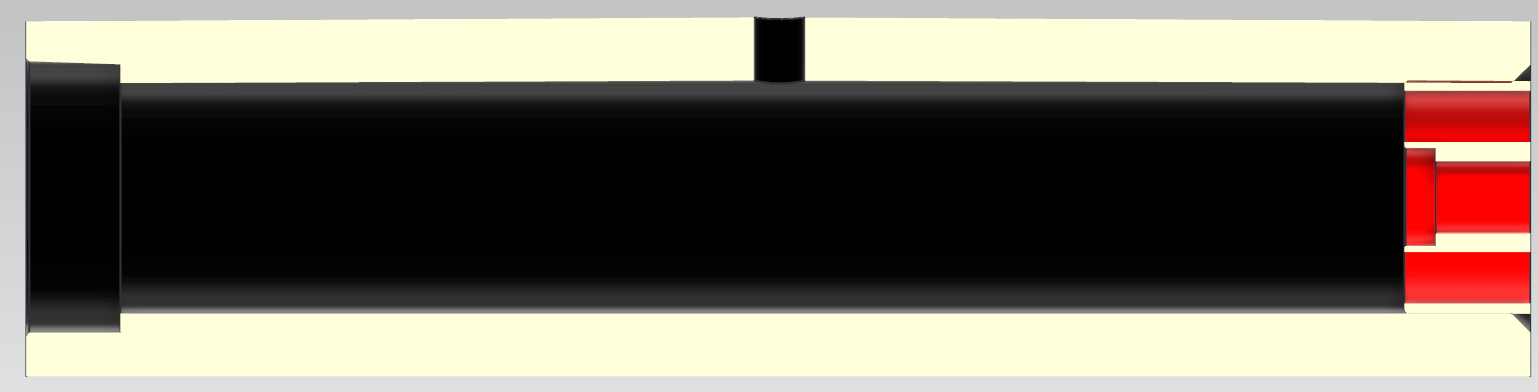
Lens Seating: Both singlet optics are registered on their flat (plano) surfaces directly against the 90° shoulders, establishing a repeatable axial and tilt reference.
Radial Decentration: Tight fit between the lens OD and housing bore (ID) to minimize decentration.
3-Point Adhesive Staking: Lenses are staked using three discrete adhesive bonds clocked 120° apart to provide semi-kinematic constraint without inducing high curing stresses into the glass.
Tripod Integration: The outer barrel incorporates a hole for a heat-set threaded brass insert (standard 1/4"-20) for stable tripod attachment.
Flexure Design
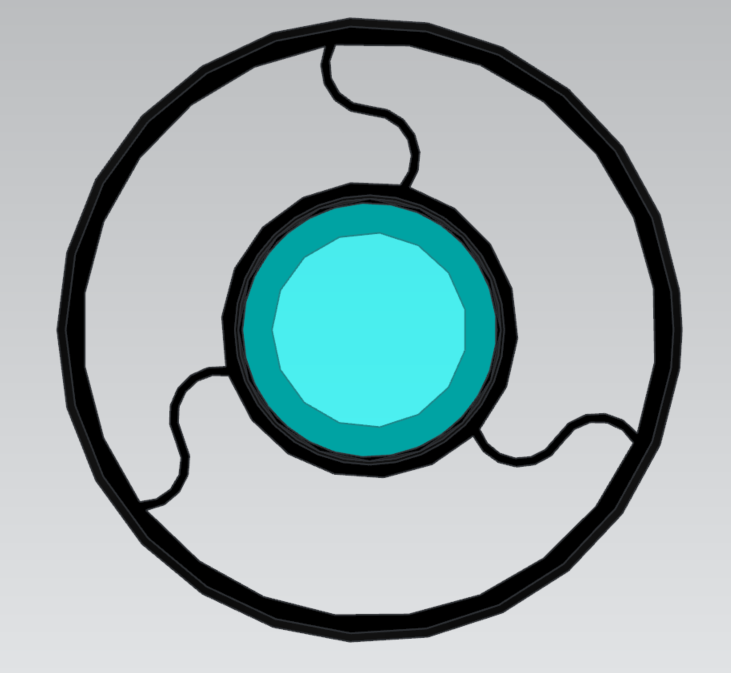
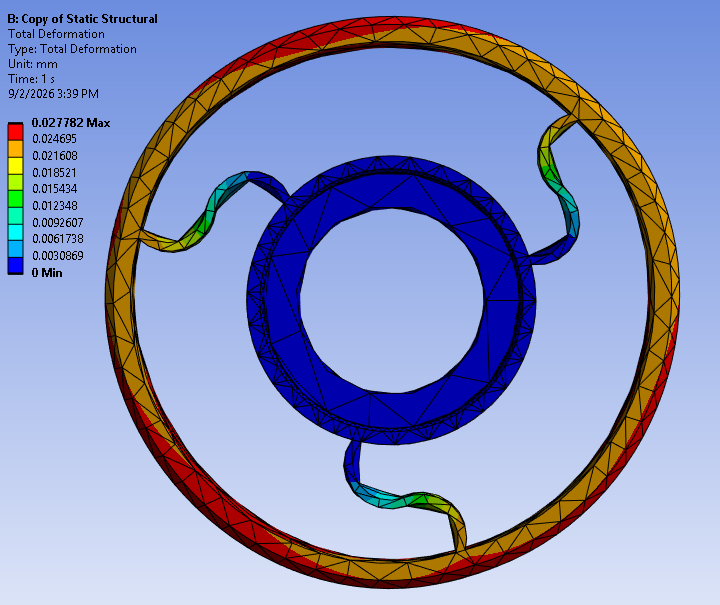
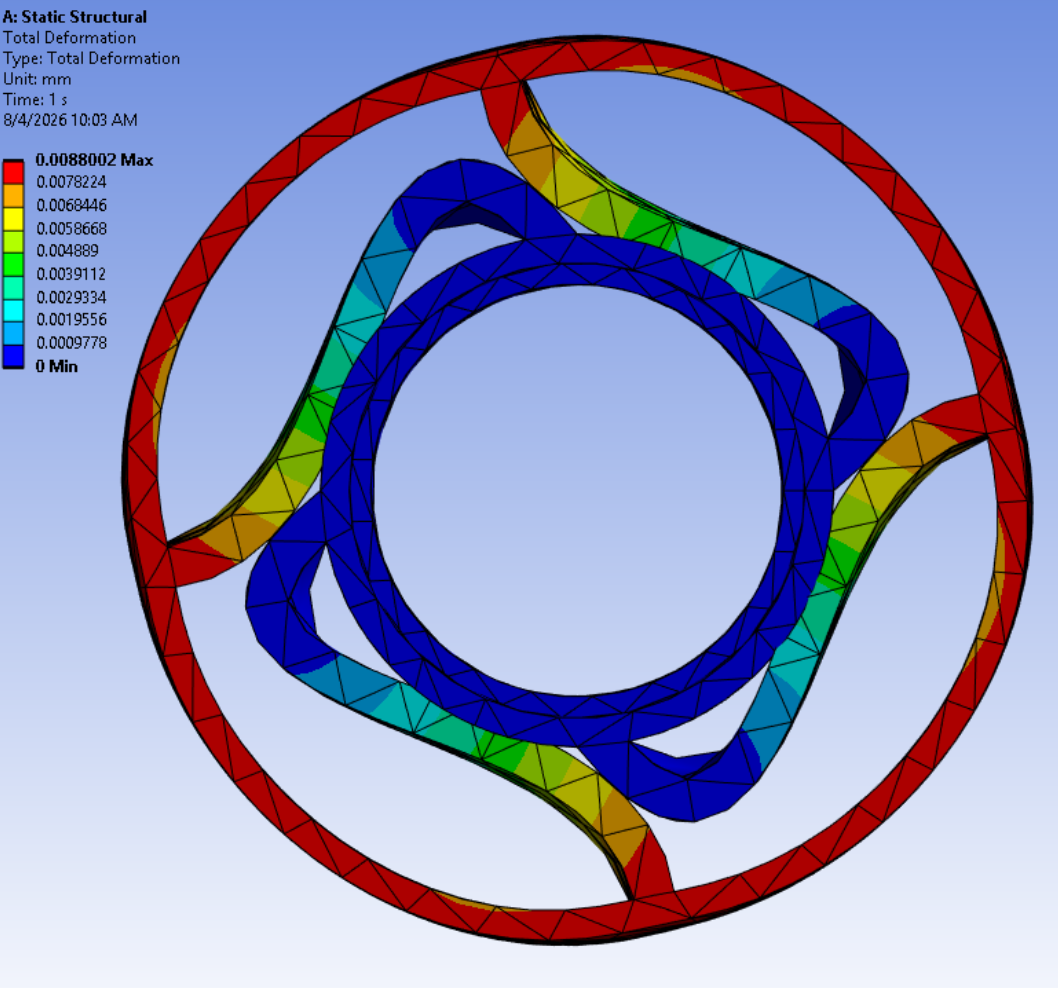
Compliance for 3D Printing: The eyepiece cell requires a press-fit interface into the main barrel. To absorb loose FDM/additive manufacturing tolerances, integrated curved flexure arms provide radial compliance while mechanically isolating the glass optic from insertion stress.
4-Arm vs. 3-Arm Iteration: FEA structural analysis showed the initial 4-arm configuration was too stiff to accommodate expected dimensional interference without excessive insertion force.
Optimized 3-Arm Design: Reducing the design to three curved flexures decreased radial stiffness by approximately 67% (1/3 the original stiffness), ensuring smooth press-fit compliance while remaining safely below yield stress under full displacement.
Results
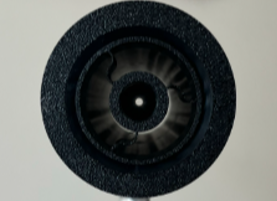
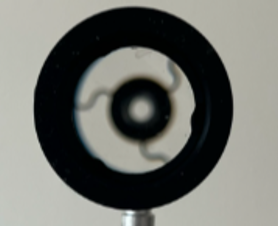
• Target Acquisition: The telescope was tested indoors targeting a refrigerator magnet across the room (reference target shown top right, detail bottom right).
• Image Formation: The prototype successfully achieved the intended ~17x angular magnification, resolving the target in upright orientation typical of a Galilean system.
• Aberration Verification:
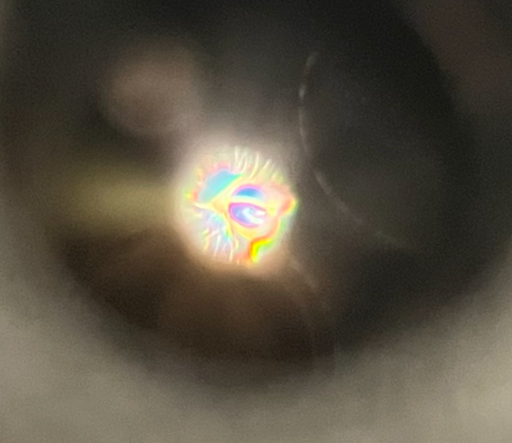
◦ Axial Color: Pronounced chromatic aberrations (rainbow haloing), matching Zemax visible spectrum dispersion predictions.
◦ Spherical Blur: Marginal ray blur softens edge definition across the field, confirming the expected trade-off of an uncorrected positive singlet objective.
*Note: Pictures were taken with an iPhone camera, blur and aberrations were also introduced from the camera.