Achromatic 2 Lens Telescope

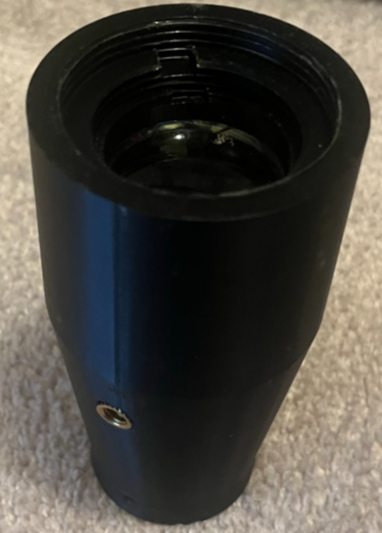
This telescope was designed and built to achieve a moderate magnification using a simple two-lens Galilean with the objective being a chromatic doublet to correct for chromatic aberrations. The system pairs a 125 mm chromatic doublet objective with a -26 mm negative double-concave eyepiece, providing an angular magnification of 4.8. Both lenses were sourced from https://surplusshed.com/.
Optical Modeling & Analysis
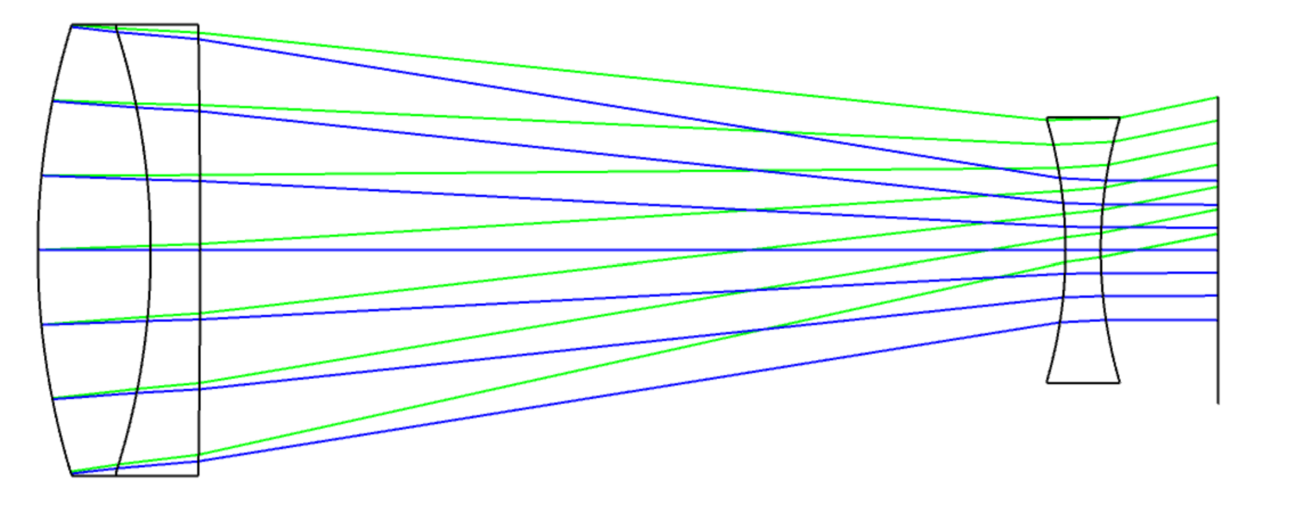
• Simulation Setup: Modeled in Zemax as an afocal Galilean system operating at an angular magnification of ~4.8x with a 38 mm entrance pupil.
• Air Gap Optimization: The physical lenses separation was set as a variable and optimized to balance paraxial collimation with marginal ray defocus.
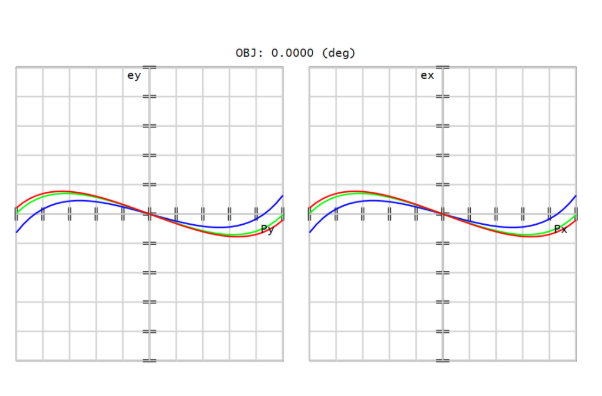
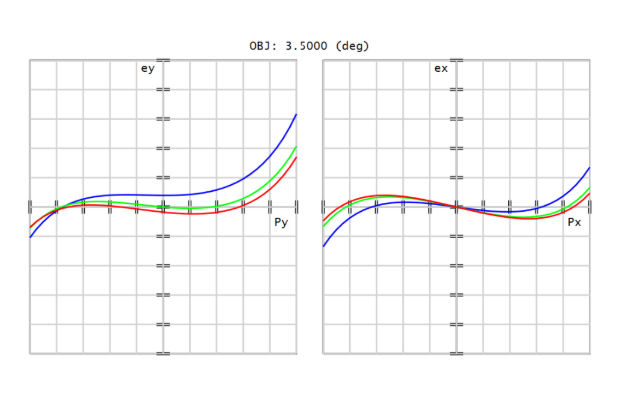
• Aberration Breakdown:
◦ Spherical Aberration: The most profound aberration present. Cubic shaped ray fans.
◦ Lateral Color: Primarily seen on the tangential plane due to the rays crossing the origin at different heights.
◦ Other aberrations are also present but in smaller amounts.
◦ *Note on Axial Color: Although corrected by the chromatic doublet, there is still some amount of dispersion across different wavelengths.
Telescope Design
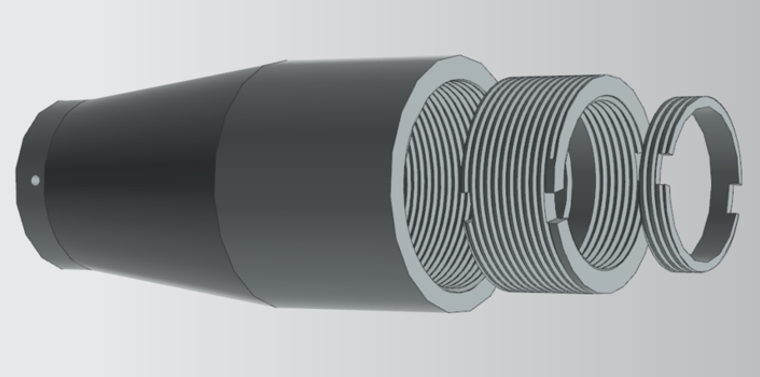
The telescope design consists of:
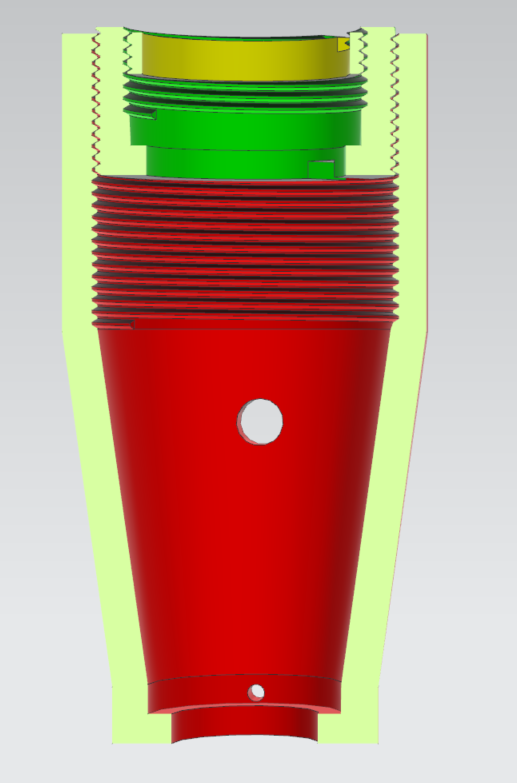
Main Barrel (red), houses the eyepiece and objective cell, features internal threads to provide axial focus adjustment for the objective lens.
Objective lens cell (green), features external threads to mate with the barrel for focusing, and internal threads to engage the retaining ring.
Retaining ring (yellow), provides axial preload to secure the objective lens firmly against the cell's internal locating shoulder.
Objective lens, f = 125 mm
Eyepiece, f = -26 mm
Eyepiece was placed inside barrel using a vacuum pen.
Eyepiece was glued via the 3 evenly spaced holes on the bottom using a needle to place the glue.
*All components were 3D printed.
Achieving Focus
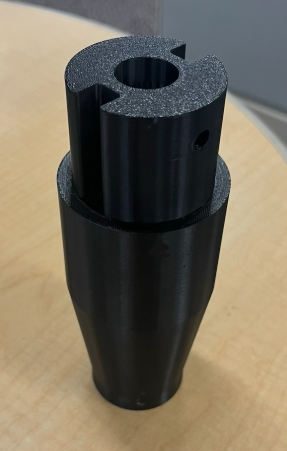
I designed a tubular spanner that grabs on the cutouts on the objective lens cells and rotates it inwards and outwards until best focus is observed. There is a hole on the center so the user can observe the focus while rotating the lens/lens cell. Focus can be adjusted for objects not at infinity
Results
• Target Acquisition: The telescope was tested indoors targeting a refrigerator magnet across the room.
• Image Formation: The prototype successfully achieved the intended ~4.8x angular magnification, resolving the target clearly in upright orientation typical of a Galilean system.
• Aberration Verification:
◦ Spherical Blur: Outer (marginal) rays blur softens edge definition across the field, whereas (paraxial) rays closer to the center of the optical axis appear sharp.